Science and AI
Correspondence to: jubayer@stanford.edu
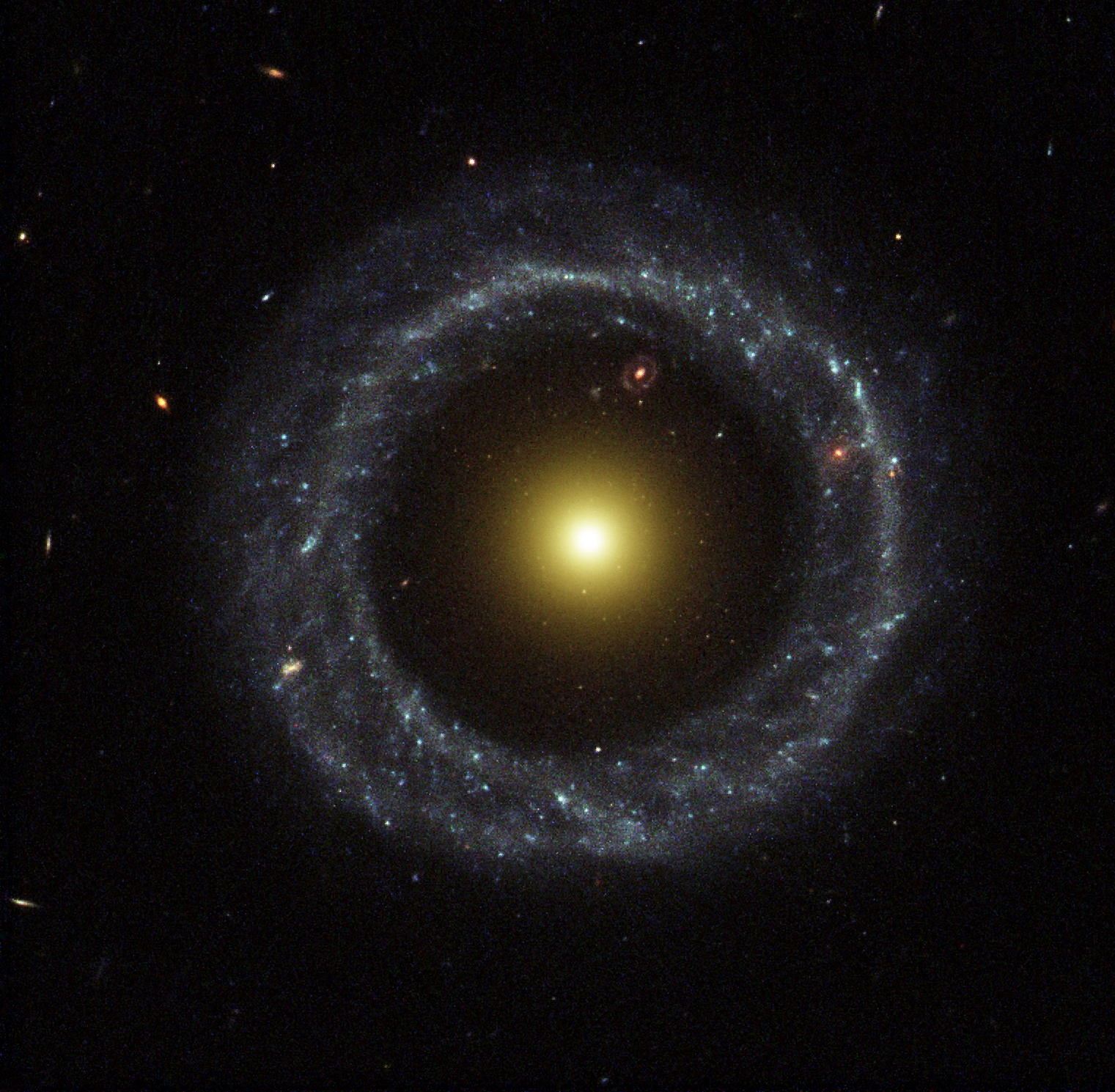
“We must know. We will know.”
With the advent of artificial intelligence capable of solving increasingly difficult problems in mathematics, including problems as challenging as Navier–Stokes [Ope26], we are being forced to find answers to questions about the very purpose of science and mathematics, and about the role of human scientists within them. Why do we care about mathematics? Does it matter whether discoveries are made by human mathematicians? If we could conjure a genie capable of answering every question we asked, would we still care about discovering the answers ourselves, even if doing so meant enduring decades with little or no progress on some of our most difficult problems? I wanted to write down some of my thoughts on these questions in this note.
1. What is the purpose of science?
There is a large class of scientific questions that we ask simply because we are curious. Their answers may eventually have enormous practical consequences, but that practical utility is really not what motivates the questions in the first place. Consider the complex numbers. We observed that while we can compute , we cannot compute . At some point, mathematicians began to study the imaginary number: a number satisfying . This simple construction opened up an entirely new mathematical world. What do polynomials look like over these numbers? What kinds of functions can be defined on them, and how do those functions behave? We discovered, remarkably, that every non-constant complex polynomial has a complex root; Liouville discovered that every bounded entire function must be constant; and, through Picard's theorem, that near an essential singularity a holomorphic function takes essentially every complex value infinitely many times. All of these results deviate very much from what we observe with real numbers and are highly counter-intuitive. These results revealed increasingly surprising structure in the world of complex numbers, and much of that exploration was driven by curiosity rather than immediate application. In particular, one proof of the first claim, the Fundamental Theorem of Algebra, uses the topological fact that a loop in the punctured plane that winds times around the origin cannot be continuously deformed into one that winds a different number of times around it. This allows us to peek at the deep underlying connections between the world of topology and the world of algebra.
While one might wonder whether we are playing with imaginary rules about imaginary numbers we conjured that may have nothing to do with reality, this same mathematics later became indispensable to physics and our understanding of the natural world: complex numbers lie at the heart of quantum mechanics, including Schrödinger's equation. Curiosity-driven exploration, in other words, often teaches us how the world works long before we know what that understanding will be useful for.
“The imaginary numbers are a wonderful flight of God’s spirit; they are almost an amphibian between being and not being.”
In a sense, pursuing these questions is a bit like exploring a new planet. We do not know in advance what we will find. We follow paths that seem interesting, encounter structures we did not expect, and discover questions we did not know enough to ask before. Along the way, we develop a deeper understanding of the world we are exploring and a deeper appreciation of how much remains unknown.
Now suppose we had access to a genie capable of answering any question we asked. We ask it, “Are there infinitely many twin primes, that is, pairs of primes differing by , such as and ?” The genie replies, “Yes.” Would that really satisfy us? The answer is a resounding no. What we want from mathematics is not merely the final truth value of a statement; we want to understand why it is true or false. What structure forces twin primes to behave the way they do? What determines their density? What new ideas are needed to see that structure clearly? Understanding each of these allows this one question to develop our understanding of several others, as we discover connections we had not expected before. If all we receive is the answer, then much of what made the question worth asking in the first place remains hidden from us.
For centuries, we wondered if there was a general formula, using radicals and arithmetic operations, for solving polynomial equations of degree five. Galois eventually showed that no such formula exists in general. But the deeper achievement was not merely learning that the answer was “no.” Galois uncovered the algebraic structures that explain why: groups, field extensions, and the relationships between symmetries of polynomial roots. Those ideas became the foundation of group theory, Galois theory, and helped give rise to modern abstract algebra, whose influence now extends far beyond the original problem. As one striking example, group theory and the study of symmetries itself became central to physics: Noether’s theorem showed that continuous symmetries correspond to conservation laws; for example, the conservation of energy in a system corresponds to time-translation symmetry of that system. In a world where a genie had simply told us that the general quintic cannot be solved by radicals, we might have learned the answer without uncovering the structures that made the answer intelligible.
This argument does not really rest on the assumption that our genie simply answers yes or no. Consider the scenario where our genie also provides us a complete proof for every answer it provides. There are several reasons why the genie could turn out to be quite detrimental to our scientific understanding.
First, being handed a proof deprives us of the many paths we might have explored in trying to find one ourselves. Those paths can be valuable even when they fail. Suppose, for example, that we conjectured that every degree-five polynomial could be solved by radicals and set out to discover a universal formula. We might try many different constructions, introduce new mathematical objects, prove intermediate results, and gradually meet dead ends (because we placed our bet on the wrong side of the conjecture in the first place). A dead end is not always wasted effort: it can reveal a hidden assumption, expose a gap in our understanding, or suggest a new question that we would never have encountered otherwise. In that sense, discovering that our original guess was wrong can itself be a form of progress. If a genie simply hands us the final proof, we may solve the original problem we sought to solve but miss out on much of the mathematics that would have been discovered along the way. In that sense, the purpose of answering problems can often be a clever disguise – we hope that, as we seek to answer these challenging questions, we find crucial gaps in our current theories and discover other interesting mathematics.
Galois’s work illustrates this point particularly well. In trying to understand when polynomial equations could be solved by radicals, he developed ideas involving groups, normal subgroups, field extensions, and the symmetries of roots. The significance of these ideas extended far beyond the original question: they became part of a general mathematical language that could be used to study many other problems. Centuries later, you and I might not even care about the quintic polynomial problem and might be interested in a completely different body of problems for which the general framework he established in algebra could turn out to be invaluable. A genie might be able to hand us a proof containing only what is necessary to settle a particular conjecture. But in doing so, it could bypass the broader conceptual development. When we struggle through these problems ourselves, painstakingly come up with various constructions and examine their various properties to deepen our understanding which, we hope, would help us determine the next steps towards solving the problem, it helps us understand a lot more than just the pathway to solving the original problem. In doing so, we nurture a whole scientific landscape as opposed to simply solving one problem.
In this sense, long-standing mathematical problems such as Navier–Stokes or the Hodge conjecture matter not only because of the statements themselves. Part of their value is that their resistance to existing methods suggests that solving them may require new ideas, new objects, or even entirely new theories. The conjecture becomes a target, but the deeper objective is often the mathematics developed in trying to reach it. One reason why the Weil conjectures were so essential for the development of mathematics in the 20th century is because, in attempting to solve them, the works of mathematicians like Grothendieck revolutionized how we think about algebraic geometry and number theory altogether. In hindsight, we could arguably say that the development of schemes and cohomological methods were more fruitful for mathematicians than even the Weil conjectures themselves.
“Is there, for example any real reason that even such famous results as Fermat's Last Theorem, or the Poincaré conjecture, really matter? Their real importance is not in their specific statements, but their role in challenging our understanding, presenting challenges that led to mathematical developments that increased our understanding.”
Second, even a correct proof may be largely incomprehensible to us. A genie could assemble unfamiliar objects, lemmas, and techniques into an enormously long argument whose individual steps we know are correct, yet whose underlying ideas we struggle to understand. There is an important difference between knowing that a proof is correct and absorbing the mathematics that makes the proof illuminating. When Perelman resolved the Poincaré conjecture, for example, substantial work remained for the mathematical community to understand, explain, and reorganize the ideas involved, and to determine what those ideas could teach us beyond the theorem itself. Now imagine a world in which our genie floods us with a large number of results every day, each accompanied by proofs that are technically correct but conceptually alien to us. We might accumulate mathematical truths far faster than we can turn them into mathematical understanding.
This possibility is especially relevant for AI. A system optimized to produce correct solutions need not automatically produce explanations that reveal the most important structure behind those solutions. While we can speculate that this might improve over time as we develop the training recipes further, it is uncertain whether, more generally, these models will be able to not only output correct proofs but also communicate the most interesting structures, phenomena, and theories within these results that should be studied more deeply independently.
This problem is significantly exacerbated if the existence of vastly more capable AI systems discouraged young people from becoming scientists in the first place due to fears of not measuring up to the capabilities of AI models that can act, approximately, as our hypothetical genie. If fewer people spend years developing deep mathematical intuition, the community capable of interpreting, extending, and questioning these systems’ discoveries could gradually shrink. The same danger exists institutionally: if governments, universities, or the broader public come to believe that mathematical research can simply be delegated to AI, support for human mathematicians may decline. We could then find ourselves producing more mathematics than ever while steadily weakening our own ability to understand it.
We are therefore approaching an important choice about how we want to use these systems. One possibility is to delegate an ever larger share of scientific reasoning to artificial intelligence. If we eventually build systems with capabilities resembling those of our genie, they may resolve in a short time questions that humans have struggled with for decades, perhaps unlocking applications that were previously blocked by those unanswered problems. In doing so, we get to cross off open questions from our list every day at an extraordinary pace. In exchange, we give up our ability to generate new lists of questions in the first place. We give up our ability to be curious. We become less practiced at forming new questions, developing our own intuitions, and extracting broader understanding from each result. In doing so, we fail to pursue science for its primary purpose – to help us understand the natural world and our place in it.
2. An optimistic view
Alternatively, we can ask where these systems should fit within our own scientific quests. Models capable of solving problems as difficult as Navier–Stokes could be extraordinarily valuable if we use them not as substitutes for our thinking, but as tools that accelerate, deepen and extend it. I can imagine a world in which we use these systems to educate ourselves, sharpen our intuitions, ask more interesting questions, and discover mathematical objects and connections that we might otherwise have missed. That is a world in which human scientists and AI systems continually push one another toward the edge of what we understand.
As our ability to automate parts of science grows, we should make sure of two things: first, that we do not lose the capabilities we have spent generations developing; and second, that we use these new tools to become capable of more than we were before. There is an instructive analogy in machine learning itself. Some of the field’s most striking successes over the last decade have come from systems that learn not merely by imitating examples, but by acting, observing the consequences, and improving through experience. This is called reinforcement learning, the area of machine learning that my own research is primarily situated in. AlphaZero, for instance, learned to play games such as Go and chess through self-play rather than being trained on data from grandmasters. In this framework, the model is given full freedom to choose its own actions instead of being instructed on how to act by an expert. As it operates on its own and observes consequences, winning some games and losing others, it learns the rules of the games, the strategies that work and the ones that do not. Its failures are not wasted: each one provides information about which strategies did not work, while successful games reveal stronger ones. Modern reasoning systems also rely on reinforcement learning; during training, these models are given a large number of difficult problems that the model must learn to solve by itself. As it makes several attempts on these problems, and observes the strategies that lead to successful solutions versus ones that lead to failures, it learns to reason. A central lesson in deep learning is that an agent learning from its own experience in an end-to-end manner, where it acts for itself and learns for itself from observing the consequences, is significantly more powerful than supervised learning from data that is provided to these models by humans. We must learn to internalize this lesson for ourselves as well and seek to learn more and grow our capabilities than to be content with increasing delegation to AI systems.
In light of all this, I hope we do not lose sight of one of the deepest purposes of science: not only to build new technologies, but to answer questions that arise from our curiosity about the world. Consider a sphere, and suppose that we have a continuous function that maps each point on its surface to the 2-dimensional plane. Must there always be a pair of antipodal points (i.e. a pair of opposite points on the surface, like the north pole and the south pole) with exactly the same two values under this map? Remarkably, the answer is yes. This is an instance of the Borsuk–Ulam theorem, which states more generally that every continuous map from to sends some pair of antipodal points to the same value. In doing so, we learned that on Earth, for example, if we assign to every point its temperature and atmospheric pressure, there must be some pair of antipodal points that share the same value of these two quantities.
What I find remarkable is that we learned to ask questions like this even when no immediate practical need demanded them. That capacity for curiosity has carried us far, and I believe preserving it is part of preserving something deeply important about what it means to exist.
One role that we must therefore continue to play is that of asking questions: questions that seek to explain unfamiliar phenomena, uncover connections between seemingly disparate structures, and probe more deeply into why certain things are true. I am certain that, over time, AI systems will also become capable of asking interesting questions and formulating interesting conjectures. But I firmly believe that our universe is infinitely complex and infinitely beautiful, and that we will never exhaust the questions worth asking. We can always ask more questions, different questions, and questions better suited to the particular things we are trying to understand. Moreover, asking the right question can itself be extraordinarily difficult. We regularly celebrate scientists such as Robert Langlands and André Weil not only for the answers they found, but for identifying profound questions, conjectural frameworks, and mathematical programs that opened entirely new directions of inquiry and shaped a century of scientific endeavour.
Of course, our role should not end with asking these questions. We must continue to participate in answering them as well. When AI systems produce solutions, one of our responsibilities is to extract from those solutions a deeper understanding of the ideas involved. What exactly it means to “understand” something is, of course, subjective, and the discourse surrounding AI's growing role in mathematics has made one thing particularly clear: there is no universal agreement about what the purpose of science should be. Still, I hope we can agree on a simpler principle. Our aim should be to pursue greater knowledge, clarity, and understanding, and the standards by which we pursue them should evolve with the tools available to us. As those tools become more powerful, we should demand deeper understanding rather than remain satisfied with standards set when those tools did not exist. As we approach increasingly capable AI systems, that standard should rise further. When proofs become abundant, we should seek more than proofs alone. When brute-force computation becomes cheap, we should seek a deeper understanding of algorithms themselves and of why some algorithms are better than others.
At the same time, we should continue to strengthen our own ability to answer questions rather than reflexively submitting every problem to our favorite AI model. We must continue to work through these questions ourselves and ask what each problem reveals about how we understand the mathematical landscape. Perhaps, in doing so, we discover our own methods for solving them. This can be extraordinarily illuminating: different paths to the same result can reveal different structures, insights, and ways of understanding the underlying phenomenon. Perhaps we encounter new mathematical objects that speak more directly to our own curiosity than someone else's solution would and that we can then choose to study more deeply. There will always, certainly, be questions that even these models fail to find answers to and there is no reason to believe that we should not attempt to pursue those questions when our own creativity can certainy yield insights that our models are missing out on. The limitations our knowledge, creativity, and curiosity is not and should never be strictly defined by the limitations of our AI systems. In any case, we should view scientific inquiry as a quest for understanding that we undertake for ourselves, rather than as a competition to cross items off a laundry list of problems that simply need to be gotten out of the way.
Here's to continuing to be curious, continuing to ask questions, and continuing to find the answers for ourselves.